Yulong River: Slow Down, Not Photo Stops
The yulong river is best experienced by slowing down, not by rushing between photo stops. Many first-time visitors to China assume the Yulong River is just a smaller version of the Li River, but that assumption leads to a rushed, superficial visit. The Yulong River is a tributary of the Li River, with a narrower, more intimate feel than the main Li River.
This article helps you decide how to spend your time at the Yulong River without falling into the photo-stop trap. We cover the differences between the two rivers, the choice between rafting and walking, and why timing matters.
Yulong vs Li: Choose Your River
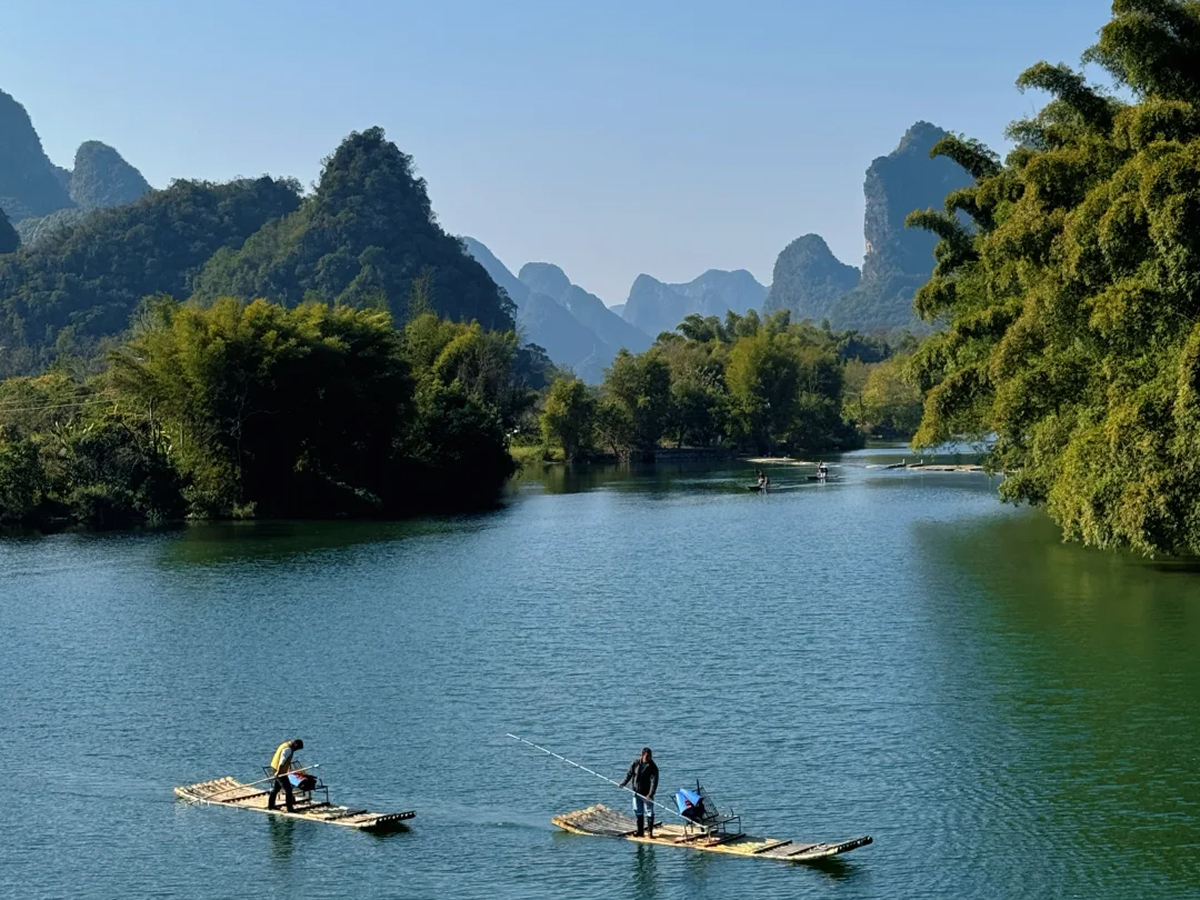
The Yulong River is a tributary of the Li River, with a narrower, more intimate feel than the main Li River. Travelers should not assume both rivers offer the same experience. The Li River is wider and busier, with larger boats and more commercial traffic; the Yulong is quieter, with bamboo rafts and paths along the banks.
- Li River: wider, busier, larger boats, more commercial traffic.
- Yulong River: narrower, quieter, bamboo rafts, riverside paths.
If you only have one day in the Guilin area, you need to choose one river, not both. Trying to cover both the Li River and Yulong River in one day leaves you rushing between photo stops instead of experiencing either river. For a slower pace, the Yulong is the better choice.
Raft or Walk: Two Paces
Bamboo rafting and riverside walking offer different paces; choose based on your preference for water versus land. Each reveals different aspects of the Yulong River.
- Bamboo rafting: you sit on a raft and glide past karst peaks, but you cannot stop wherever you want.
- Riverside walking: you set your own pace, stop for photos or rest, and see details like water buffalo and village life.
Rafting is more passive; walking is more active. If you want to feel the river's calm, walking along the bank is better. If you want the classic view from the water, rafting is the way.

Beat the Crowds: Timing Matters
Early morning or late afternoon visits help avoid the largest crowds, though exact conditions vary. Midday is when tour buses arrive and the river gets busy.

- Arrive at opening time for the quietest experience.
- Late afternoon light is softer and crowds thin out.
- Avoid midday if you dislike waiting for rafts or sharing paths.
Plan your Yulong River visit outside peak midday hours. Even on busy days, early and late visits feel more personal.
Give Yulong a Full Day
Instead of trying to cover both the Li River and Yulong River in one day, consider dedicating a full day to the Yulong area to experience its slower pace without feeling rushed. A full day lets you raft in the morning, walk in the afternoon, and still have time to sit by the river.
If you only have a half day, choose one activity. Rushing between rafting and walking means you enjoy neither. For more ideas on what to do in Yangshuo, see Things to Do in Yangshuo: Two Nights, Two Rivers, and What to Skip.
Plan Your Yulong Visit
Before visiting the Yulong River, check official sources for current rafting schedules, walking trail access, and any restrictions, as conditions change. Do not rely on outdated information from travel forums.
- Confirm rafting operating hours and ticket availability.
- Check if walking trails are open after rain.
- Ask your hotel about the nearest access point.
For a comfortable stay near the river, read Hotels Yangshuo China: Stay by the River You Will Walk. If you want help planning a private Guilin itinerary, see Guilin Private Tour: Days, Li River Segments, and Yangshuo Base.