Vegetarian Chinese Food: Temple, City Restaurant, or a Kitchen Brief
There is no single rule for eating vegetarian in China. Temple kitchens, city vegetarian restaurants, and an ordinary restaurant asked to cook without meat are three different scenarios — with different risks and different trade-offs.
Temple Kitchens: The Most Consistent Option
Most major Buddhist temples in China run their own kitchens. The food is vegetarian by practice — monks do not eat meat. What arrives at the table is consistent, deliberate, and usually served at a fixed time.
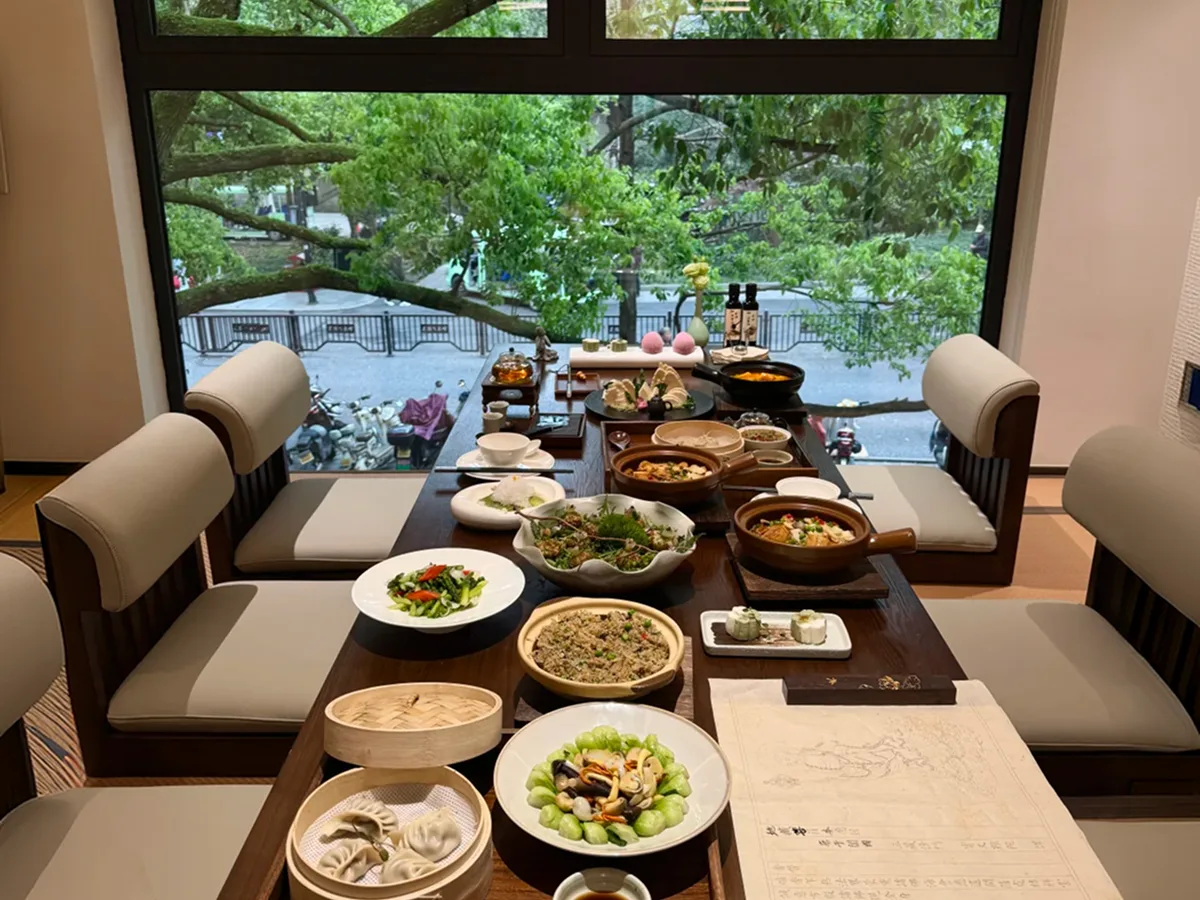
Lingyin Temple in Hangzhou runs a vegetarian restaurant adjacent to the main hall. Guangji Temple in Suzhou serves lunch to visitors. These are not tourist gimmicks; the kitchens feed the monastic community first and visitors second.
Bring an appetite for vegetables cooked in oil and soy, with texture as the main event rather than protein variety. Noodle soups, rice dishes, and braised vegetables are the base. The experience is calm and structured — not the chaotic energy of a market food stall.
City Vegetarian Restaurants: Legitimate But Variable
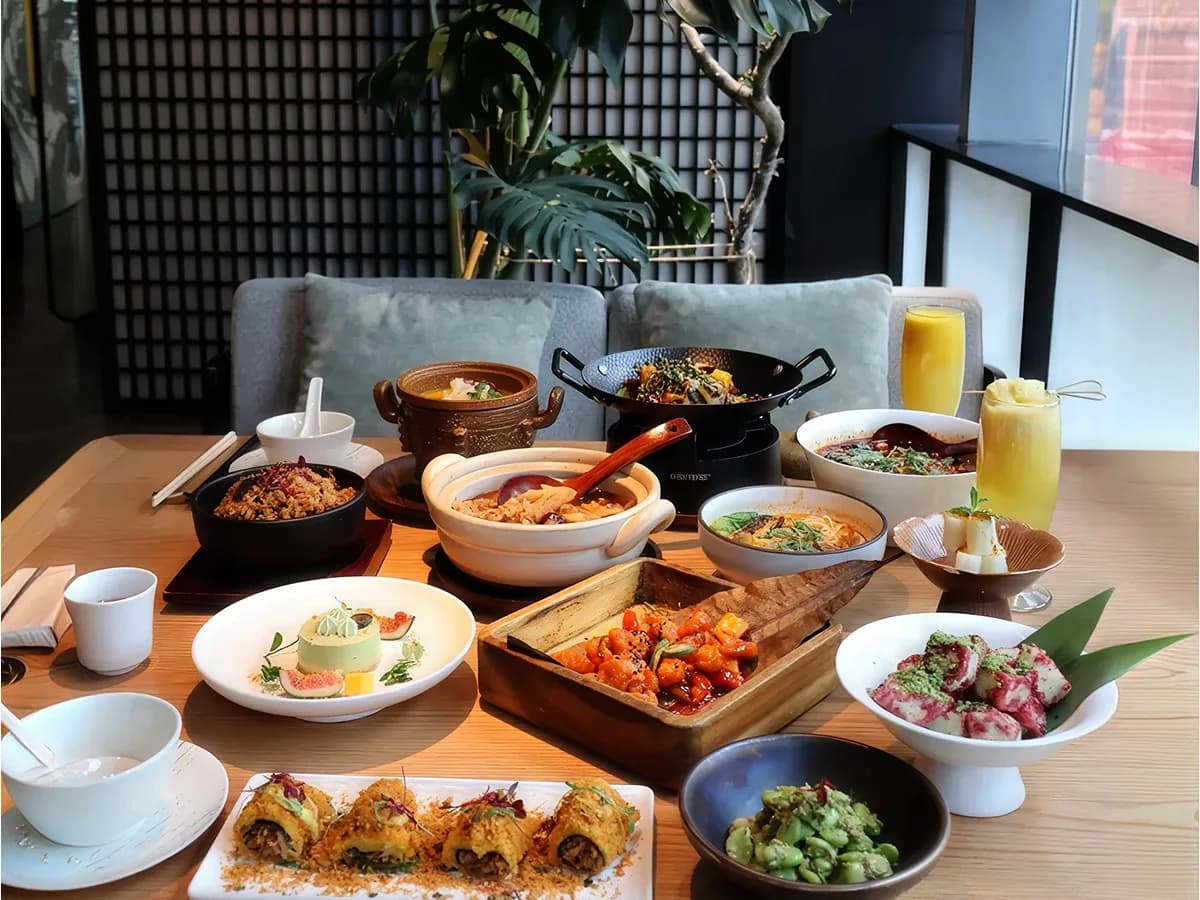
Shanghai, Beijing, and Guangzhou all have vegetarian restaurants that are not attached to temples. Some cater to local Buddhist customers; others attract a younger urban demographic. Quality and menu size vary considerably between cities and even between neighborhoods.
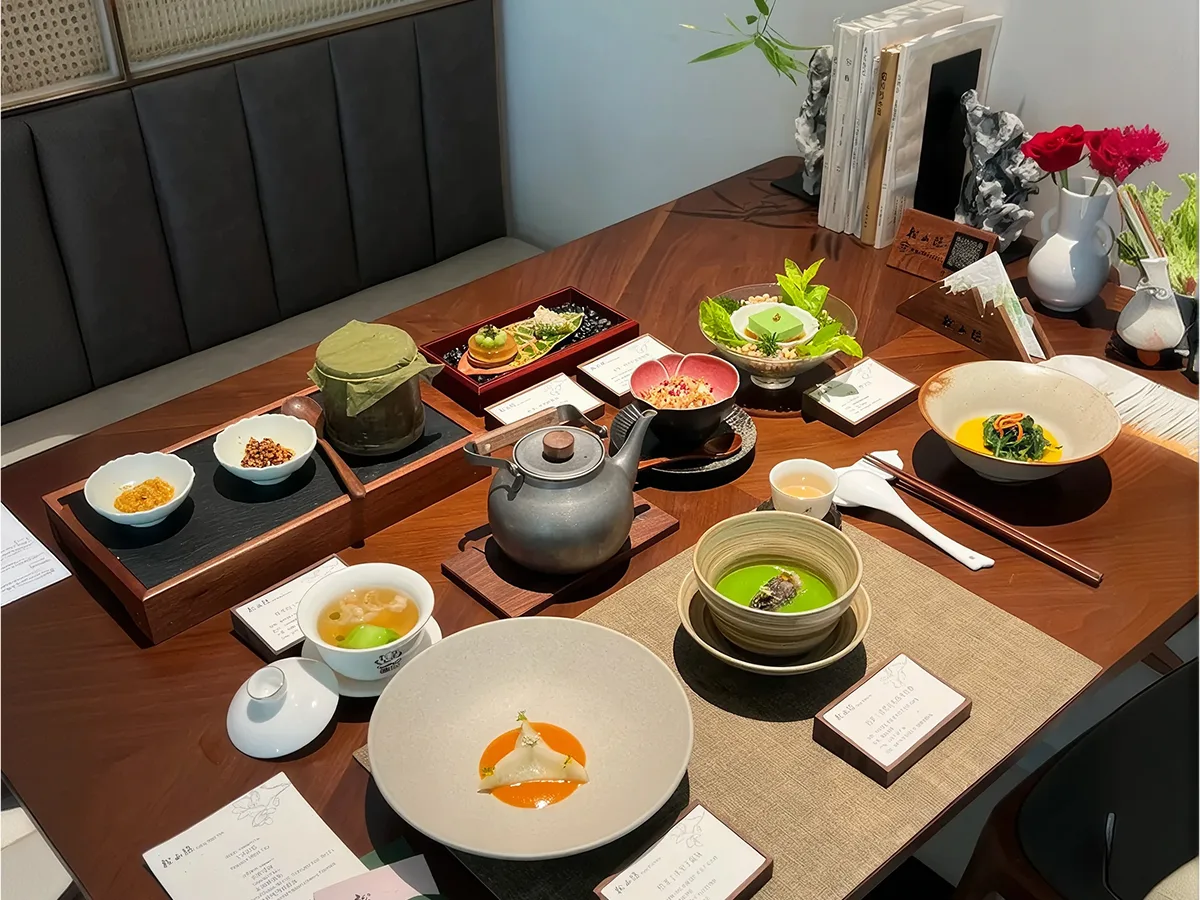
The main risk is what the kitchen considers vegetarian. Oyster sauce — made from oyster broth — is a standard seasoning in southern Chinese cooking. Bone stock is used in noodle soups that look clear and vegetarian. Vegetable dishes in ordinary restaurants are often cooked in the same wok with meat.
If avoiding these is a hard line rather than a preference, a temple kitchen is more reliable than a city vegetarian restaurant.
Asking a Regular Kitchen to Cook Without Meat
Asking a Sichuan restaurant or a Guangzhou dim sum place to omit meat is possible, but it comes with conditions the kitchen will not print on the menu. They can try. They cannot guarantee the wok was not used for meat five minutes earlier, or that the sauce in the vegetable dish is the vegetarian version and not the standard one.
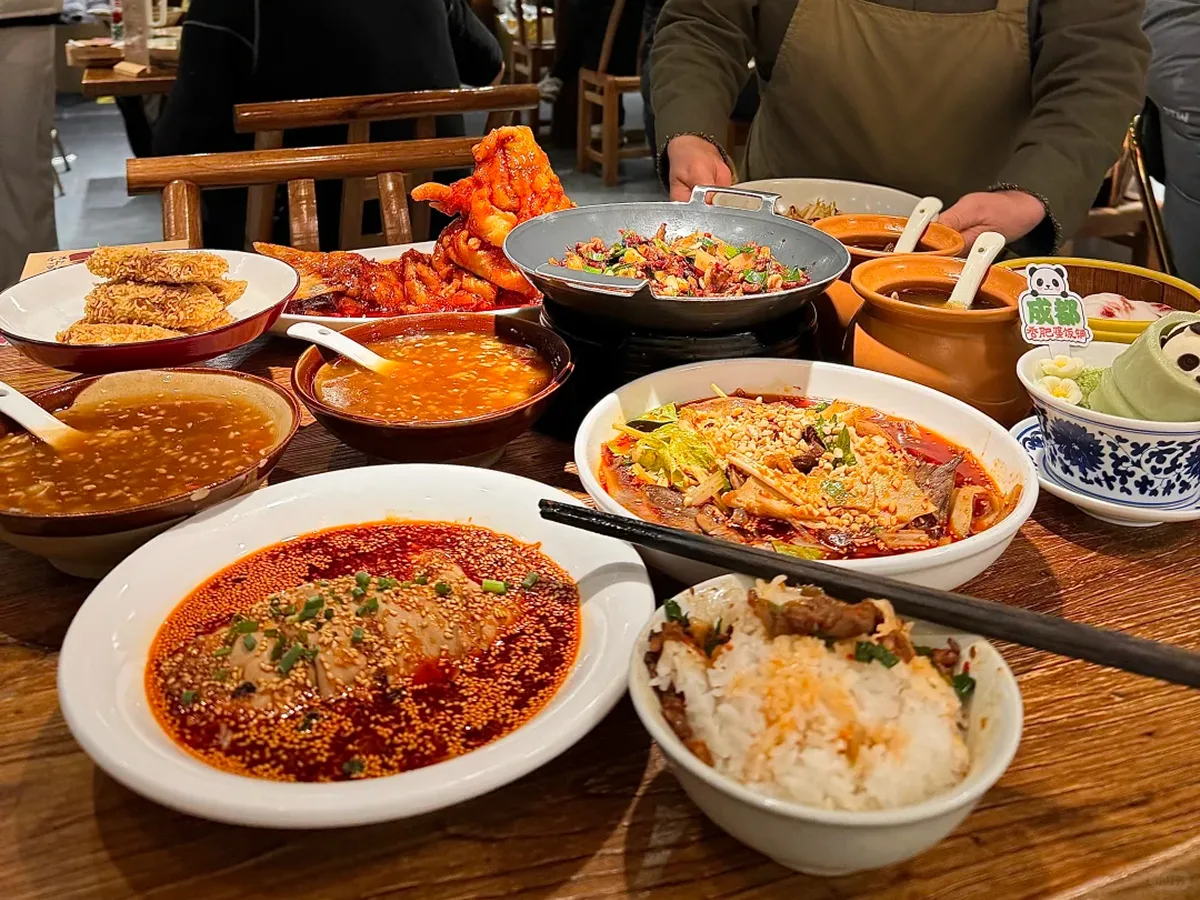
The more specific the brief, the better the kitchen can manage it. Listing exact ingredients to avoid — oyster sauce, fish sauce, chicken stock, pork fat — gives the kitchen something to work from. The dining etiquette guide covers how to communicate food requirements without creating an awkward scene at the table.
For clients with strict dietary requirements, the better option is a private kitchen or a confirmed temple lunch rather than a street restaurant. Private food tour arrangements can include a confirmed vegetarian kitchen and written ingredient brief for the chef. We do not send clients into an ordinary restaurant with a list and hope for the best.
The Sichuan Kitchen Problem
Sichuan food is the most difficult cuisine to eat vegetarian in China by default. The flavor base — doubanjiang, master stock, and often lard — is not vegetarian. Vegetarian Sichuan restaurants exist in Chengdu but they require a deliberate search, not a walk-in.
If a client is eating vegetarian specifically to avoid pork — and pork is the main animal protein in Sichuan cooking — the practical risk is lower than it appears. If the client is vegan or ovo-lacto vegetarian for other reasons, Chengdu requires advance planning rather than improvisation.
What TTQ Can Arrange
TravelToQin can confirm temple lunch timings and make reservations at city vegetarian restaurants as part of a private itinerary. For clients with strict vegetarian requirements, we can arrange a private kitchen with a written ingredient brief submitted in advance. We cannot guarantee that every kitchen along a multi-city itinerary will handle vegetarian requests consistently — that is not how most Chinese restaurants operate.