Guilin Rice Noodles: Eat Like a Local Before 10 a.m.
Most visitors to Guilin eat their first bowl of guilin rice noodles at a restaurant near the Li River or inside a scenic area. That is the wrong move. The real breakfast ritual happens before 10 a.m. in neighborhood shops where locals queue, order by weight, and eat the noodles dry-mixed before adding broth.
This guide explains the sequence, the ordering language, and how to fold a noodle stop into a day trip to Longji Rice Terraces without wasting time or money.
Breakfast Ritual, Not Tourist Trap
Guilin rice noodles are a breakfast ritual, not a lunch or dinner dish. Locals eat them early, often before work or school, and many shops close by mid-morning. If you arrive after 10 a.m., you may find the best pots empty or the shop already closed.
Why locals eat noodles for breakfast
The broth is light, the rice noodles are quick to cook, and the toppings add protein and fat. It is a fast, warm meal that fits a working morning. Tourists who treat it as a lunch option miss the peak freshness and the local crowd.
How to spot a local shop
- A queue of locals before 9 a.m., not a line of tour buses.
- A simple menu board with weights and topping names, not photos of every dish.
- Plastic stools and shared tables, not tablecloths and English menus.
- Steam rising from the noodle pot and a broth pot that is almost empty by 10 a.m.
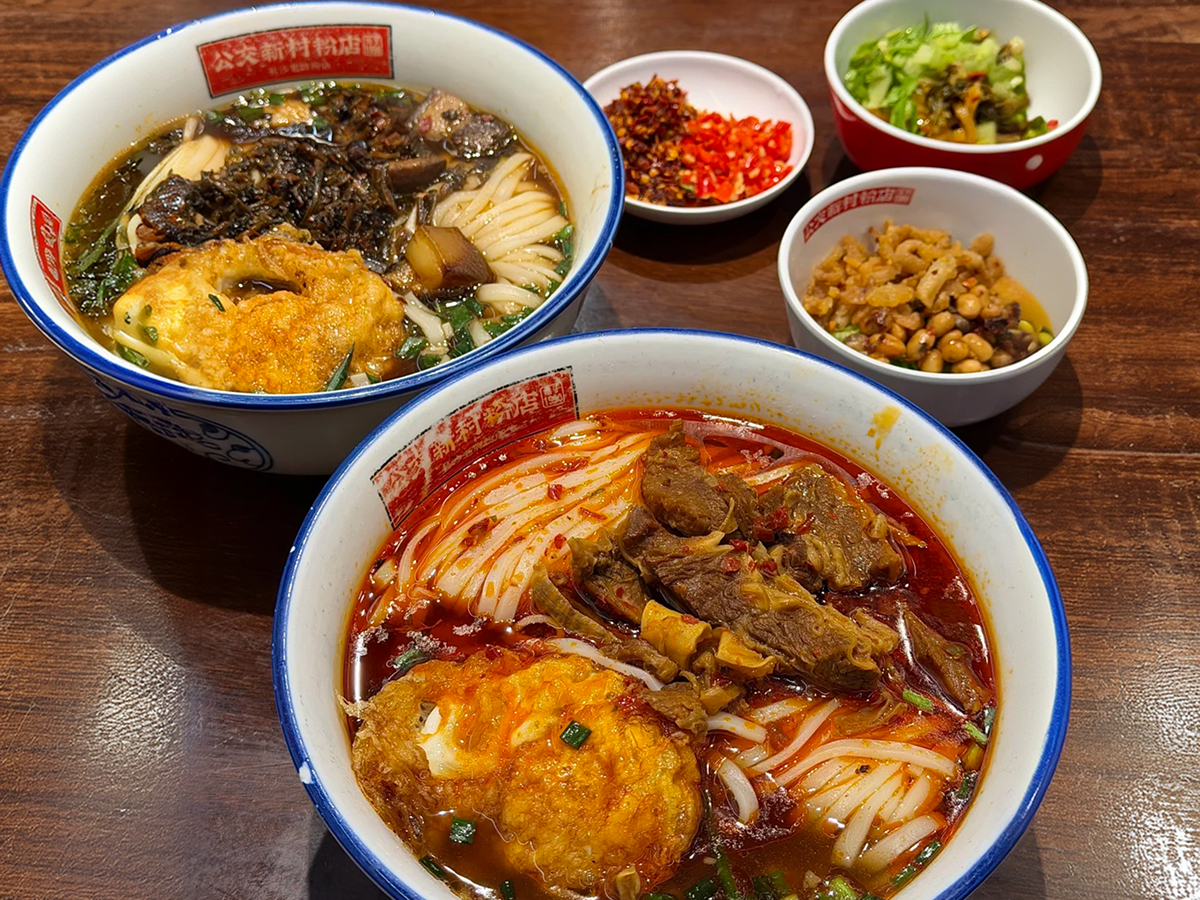
These signals matter more than any review score. A shop that serves locals every morning has to be fast, cheap, and consistent.
Order by Weight, Not by Photo
At a local noodle shop, you order by weight, not by pointing at a photo. The standard portions are er liang (two liang) and san liang (three liang). One liang is about 50 grams, so er liang is roughly 100 grams of rice noodles, and san liang is about 150 grams.
What er liang and san liang mean
- Er liang: a smaller bowl, enough for a light breakfast or if you plan to eat again soon.
- San liang: a larger bowl, better for a full morning before a long drive or hike.
- Ordering by weight: say the number first, then the topping, so the cook can portion correctly.
Guo shao vs. lu cai fen
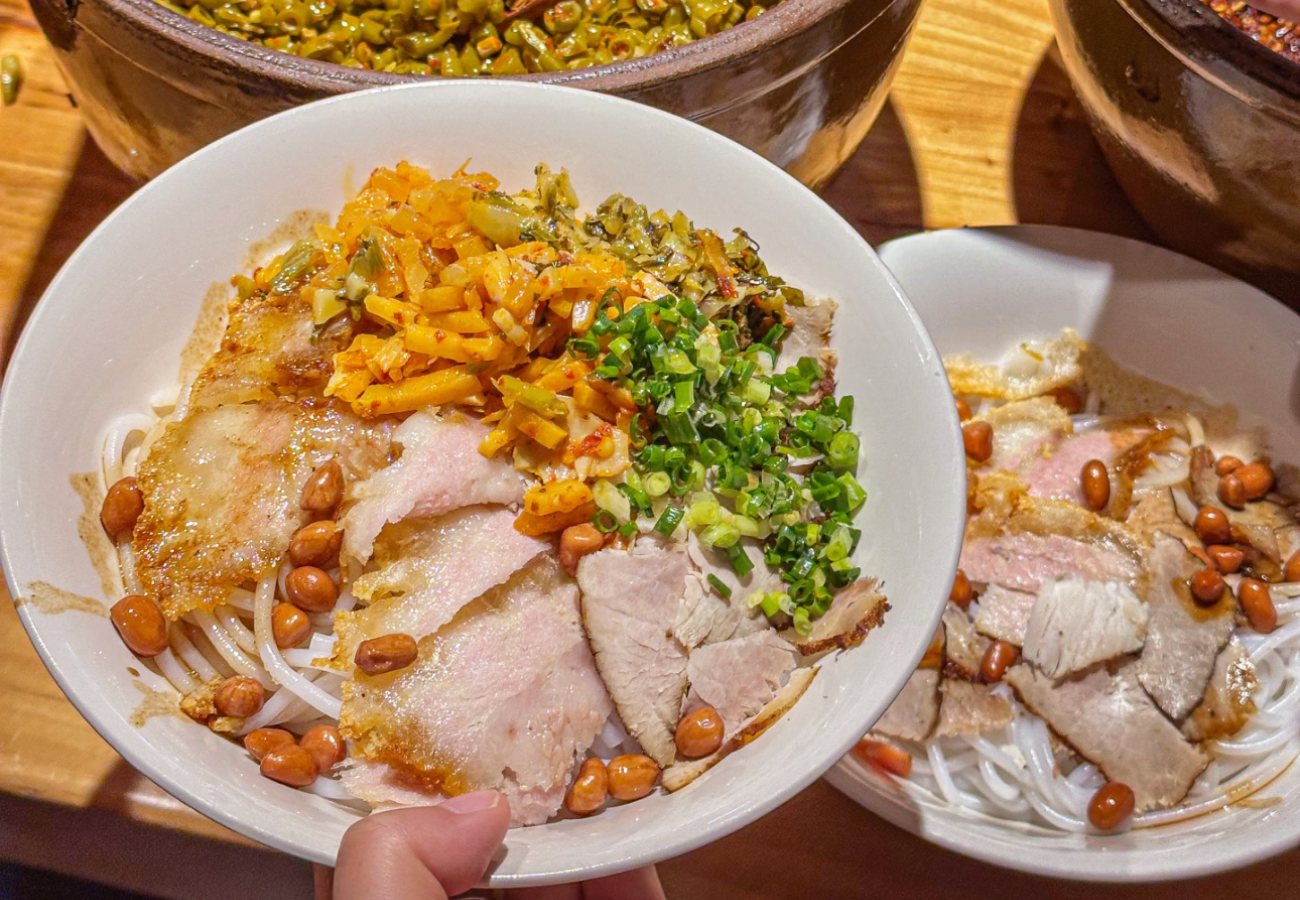
- Guo shao: crispy pork, usually from the belly, fried until the skin crackles. It adds fat and crunch.
- Lu cai fen: a marinated mix, often including tofu, egg, or offal, simmered in a spiced broth. It adds depth and salt.
- Both: you can ask for a mix, but locals usually pick one and add pickled vegetables from the condiment table.
The condiment table is where you finish the bowl: pickled long beans, chili paste, chopped scallions, and sometimes crushed peanuts. Add a little at a time, not all at once.
Dry-Mix First, Broth Last
The correct sequence is to eat the noodles dry-mixed first, then add broth to finish. This is the part most tourists get wrong. They pour broth over everything immediately and end up with a soggy, diluted bowl.
Step-by-step eating sequence
- Take the bowl with noodles, topping, and a little sauce at the bottom.
- Mix everything with chopsticks until the noodles are coated and the topping is distributed.
- Eat about half the bowl dry, tasting the rice noodle texture and the concentrated sauce.
- Add broth from the pot or kettle to the remaining noodles, stir, and finish as a soup.
Why the order matters
Dry-mixing keeps the rice noodles springy and lets the sauce cling. Adding broth too early turns the noodles soft and washes away the flavor. The two-stage method gives you two different bowls in one: a dry tossed noodle, then a light soup.
Fold Noodles Into Your Route
Instead of treating rice noodles as a standalone meal, we fold them into the day's routing—like a pre-departure stop in a residential area en route to Longji—so you eat where locals do and avoid the tourist markup. This is the difference between a food errand and a food experience.
Pre-departure noodle stop
On a day trip to Longji Rice Terraces, leave Guilin early and stop at a neighborhood shop on the way out of the city. You eat a hot breakfast, avoid the overpriced noodle stalls near the scenic area entrance, and still reach the terraces before the tour buses.

Avoiding overpriced scenic-spot food
- Scenic-spot restaurants charge more for the same bowl because of rent and captive customers.
- Quality is often lower because they serve tourists who will not return.
- A local shop on the route gives you better food at a fair price, and you support a neighborhood business.
For a full Longji day, see Longji Rice Terraces Trip Planning: Worth a Full Day from Guilin? to understand the drive time and what to expect.
Plan Your Noodle Morning
A good noodle morning needs a little planning. Check official opening hours for breakfast service before you go, because some shops close by 10 a.m. or earlier. And allow extra time for city traffic, especially if you are heading to Longji on a weekday morning.
Check official hours for breakfast service
- Many local noodle shops open around 6 or 7 a.m. and close by 10 or 11 a.m.
- Hours can change, so verify on the shop's official page or ask your hotel front desk the night before.
- If you are on a private tour, ask your guide to confirm the shop is open before you detour.
Allow extra time for city traffic
Guilin's morning traffic can add 20 to 30 minutes to a cross-city drive. If you plan to eat noodles and then drive to Longji, leave by 7:30 a.m. at the latest. A 7 a.m. noodle stop gives you a relaxed breakfast and still puts you at the terraces before noon.
For a private tour that includes Longji and a flexible morning, see Guilin Private Tour: Days, Li River Segments, and Yangshuo Base.