Fujian Tea: Wuyi Rock Tea, Travel Context, and How to Understand It Without a Shopping Stop
Why Fujian Tea Belongs in a China Journey
Fujian produces some of China's most historically significant teas, and the tea-producing region of Wuyishan in northern Fujian is a destination in its own right—not as a tea-buying stop, but as a place where the relationship between geography, craftsmanship, and flavor is legible to a visitor who takes the time to understand it.
The three most internationally recognized Fujian teas are:
- Da Hong Pao — the "big red robe" oolong from Wuyishan, one of the most famous names in Chinese tea. The original Da Hong Pao mother plants on the Wuyi cliff face are protected and not harvested. Commercial Da Hong Pao is produced from propagated cultivars descended from these plants.
- Bai Jiguan — a light oolong with a distinctive yellow-green leaf and a milder, more floral character than Da Hong Pao. Less commercially prominent but prized by connoisseurs.
- Tieguanyin — the oolong most associated with Anxi County in southern Fujian, named after the Iron Goddess of Mercy. More widely exported than Wuyi rock teas, with a broader market profile.
This page focuses on Wuyi rock teas—Fujian oolongs grown in the Wuyi Mountains—because that is where the travel context is strongest and where the relationship between the tea and its environment is most visible to a visitor.
Wuyi Rock Tea Is About Place, Not Just Flavor
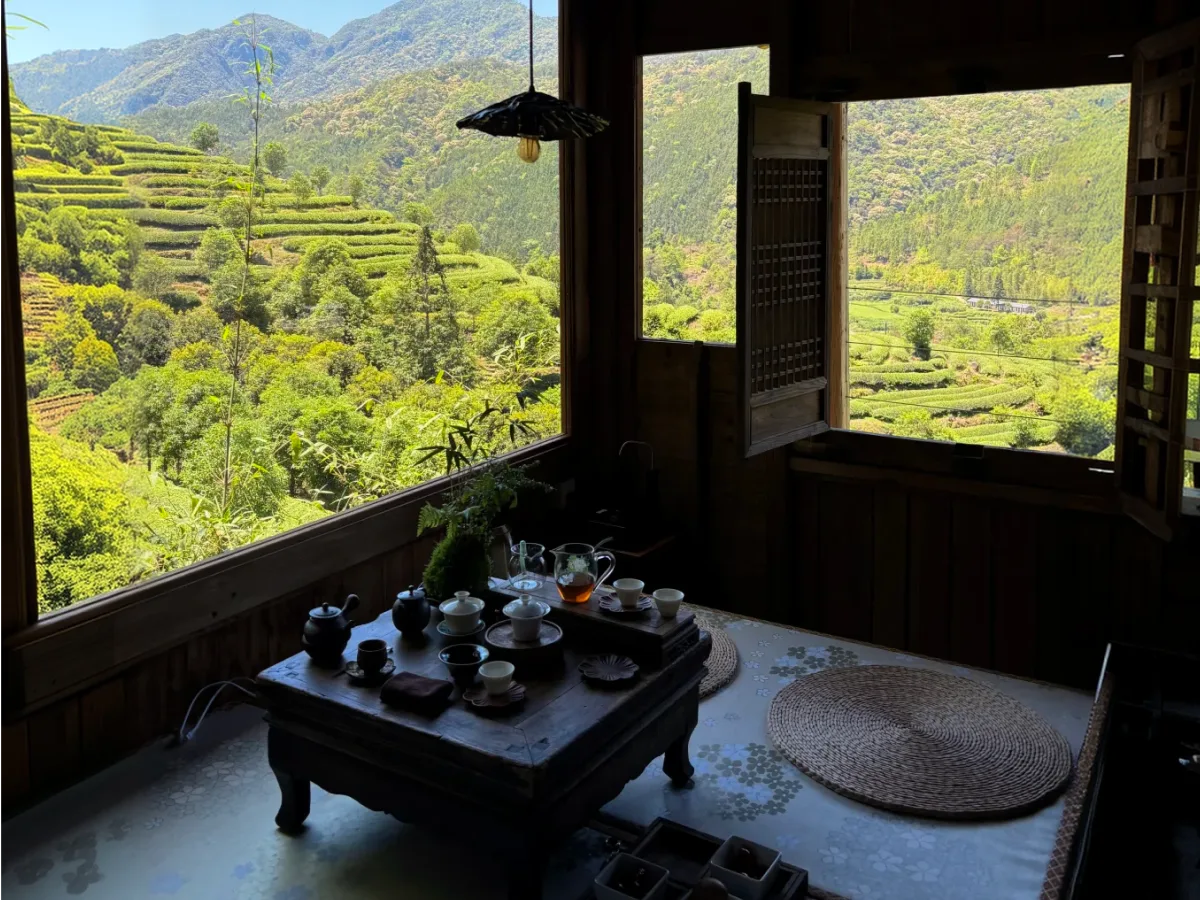
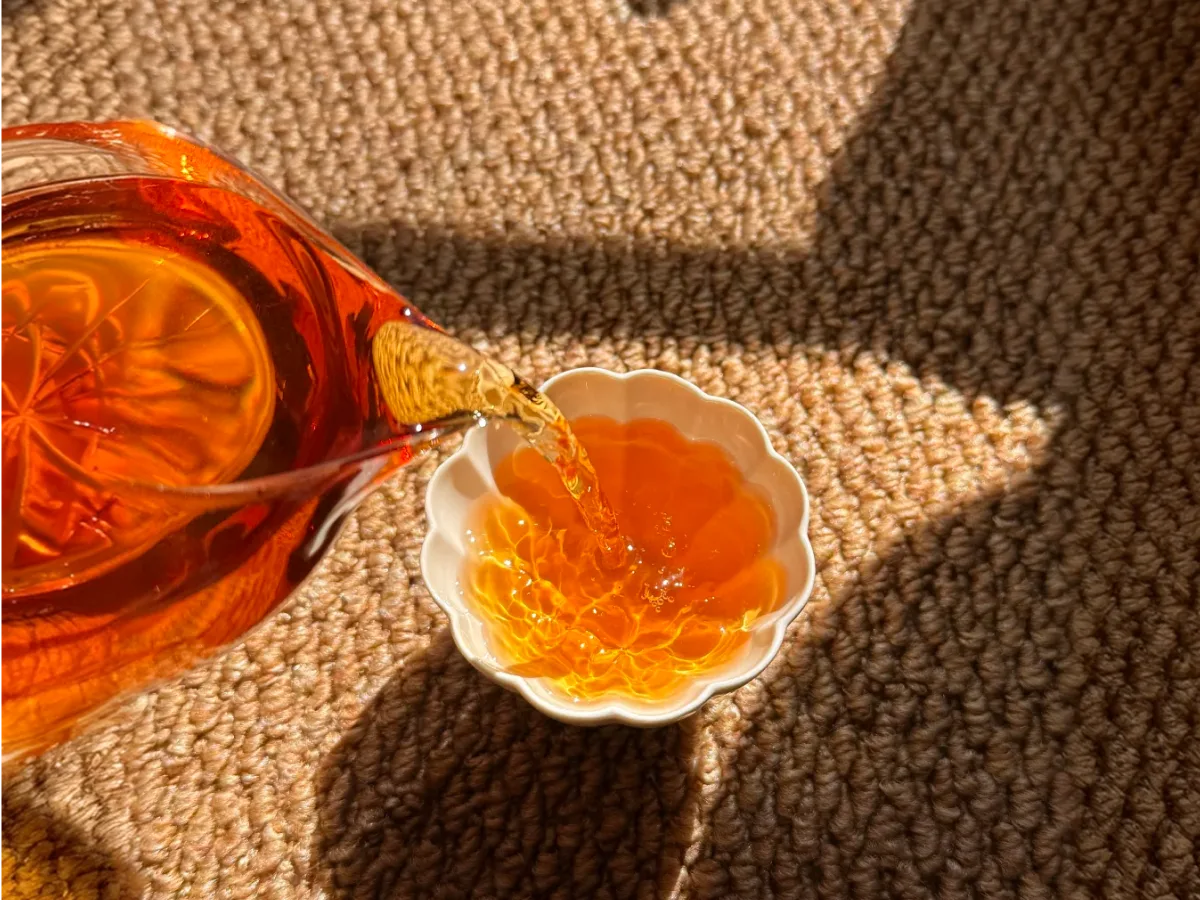
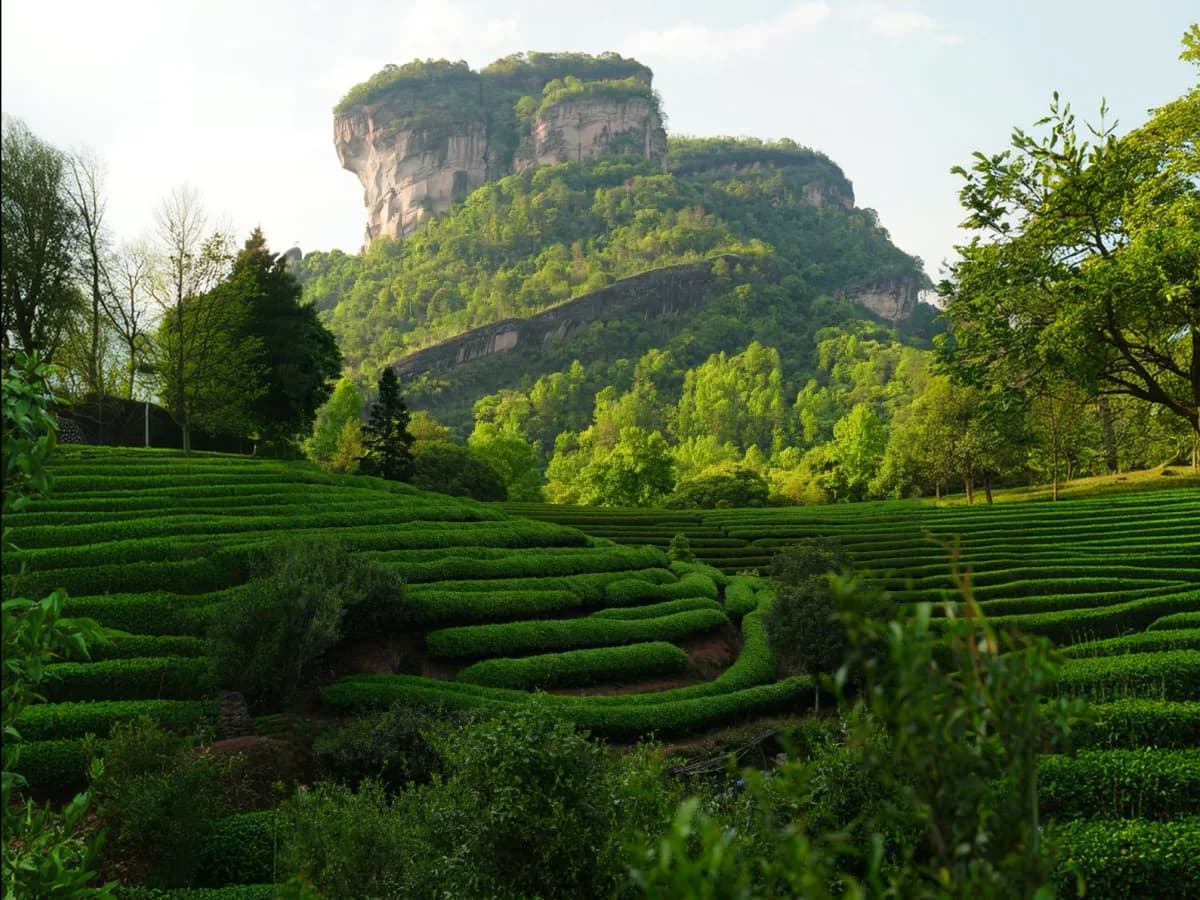
Wuyi rock tea is an oolong category defined by production within the Wuyi Mountain scenic area in Fujian. The Chinese term for this is zheng yan, "authentic rock", referring to tea grown on the rocky slopes of the Wuyi range. The mineral content of the rocky soil, the humidity from the river valley, and the altitude differential between the high peaks and the tea gardens all contribute to what tea professionals describe as the "rock rhyme" of the finished tea—the mineral, slightly smoky undertone that distinguishes Wuyi oolongs from lower-altitude Fujian teas.
The tea mountains in Wuyishan are organized by elevation and location. Teas from the high peaks—are considered the highest quality and command the highest prices. Teas from the outer slopes are still genuine Wuyishan production but without the same mineral character. The distinction between half-rock, from the outer zone and river flat tea, from the valley floor is the primary quality hierarchy in Wuyi tea, and it is determined by geography, not by processing technique.
A visitor to Wuyishan can walk through the tea gardens, see the rocky terrain that produces the flavor, and taste teas from different 山场 (shanchang, tea mountain plots) side by side at one of the tea houses in the town of Wuyishan . This is the experience that makes the tea legible—not the retail transaction, but the tasting context.
How to Visit Wuyishan Without Making It a Shopping Stop
The standard problem with "tea tourism" in Wuyishan is that it leads to a tea house visit that is also a sales conversation. This is common enough that many visitors assume Wuyi tea experiences are inherently shopping-oriented. They do not have to be.
A tea visit that is about the experience and not the transaction looks like this:
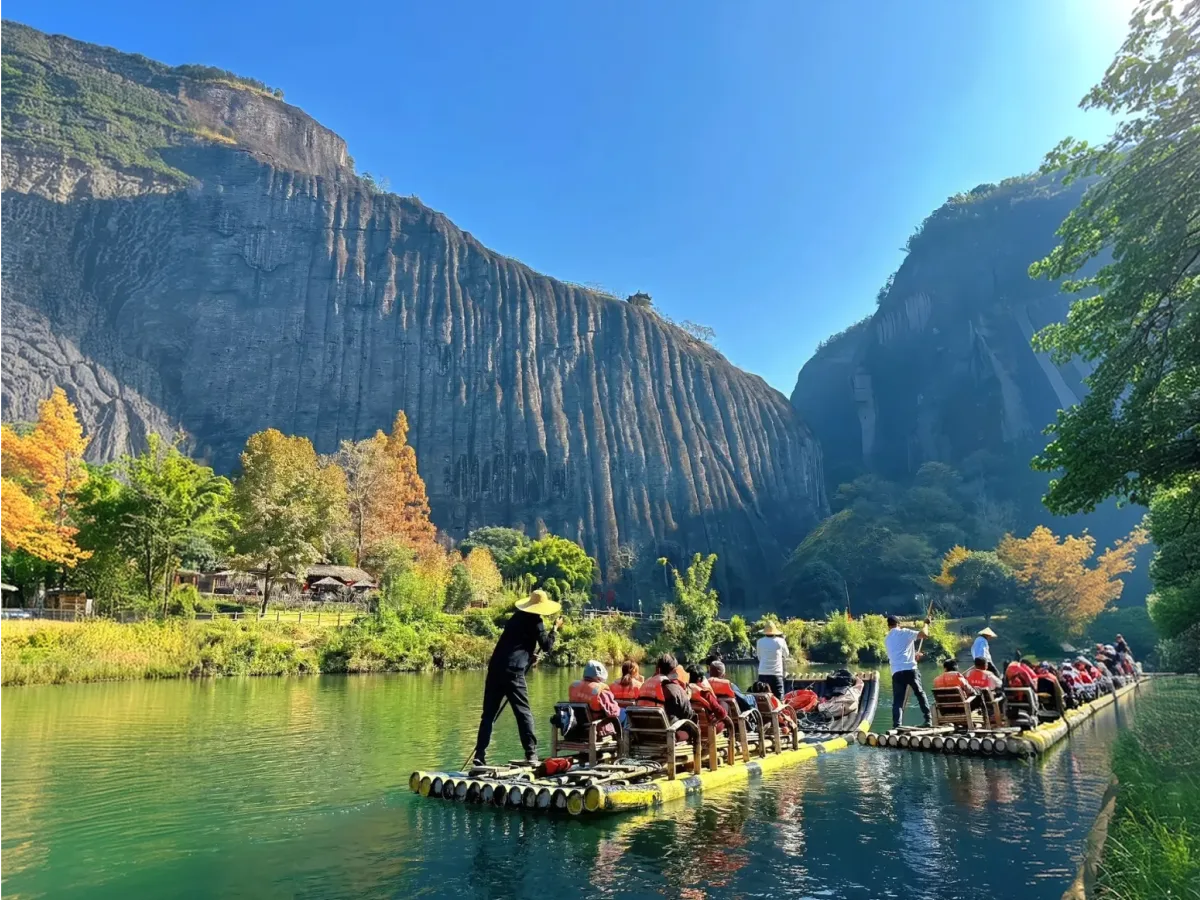
- Morning: Wuyi Mountain scenic area — the Nine Bend River bamboo raft ride through the karst canyon is the primary activity in the scenic area. The raft ride is 90 minutes and passes below the tea gardens on the upper slopes. This is the visual context for the tea.
- Midday: Tea house tasting — several tea houses in the Wuyishan town cater to visitors who want to taste without buying. The emphasis is on understanding the difference between mountain plots, roasting level), and season. A skilled tea master will work through several teas and explain the differences in brewing water temperature, steeping time, and leaf quantity. This is a knowledge conversation, not a sales pitch.
- Afternoon: Tea garden walk — the tea gardens above the Nine Bend River are accessible by footpath. Walking through the plots gives a sense of the scale and the terrain that no tea house conversation provides.
To find a tea house that focuses on tasting rather than sales: ask your accommodation for a referral, or look for establishments that describe their sessions in terms of tea culture tea art rather than tea for sale. The distinction is not absolute, but it is visible in the language.
Da Hong Pao: The Name, the Price, and What to Ignore
Da Hong Pao (big red robe) is the most commercially exploited tea name in Chinese oolong. It appears on tea menus, gift boxes, and auction records that sell at extraordinary per-gram prices for the original harvest. These prices are not relevant to understanding or drinking Da Hong Pao.
The commercial Da Hong Pao available at tea prices in the $20–$100 per 50g range is produced from propagated cultivars. The flavor profile—light oxidation, slight roasting, mineral backbone, floral finish—is accessible at this price level. The auction prices for the original harvest are a separate phenomenon from the commercial market, and they reflect rarity, provenance, and collector interest more than they reflect tea quality in any functional sense.
When you taste Da Hong Pao in Wuyishan, taste it as a Wuyi rock tea—as a product of the mountain, the soil, and the roasting craft. Do not taste it against the frame of the auction price. The flavor is the experience. The price is noise.
The Roast Level Is the Practical Decision
Wuyi rock teas are available in light roast, medium roast, and heavy roast versions. The roasting process is what distinguishes oolong from green tea; it determines the oxidation level and the storage character of the finished tea.
- Light roast — closer to green tea in character; floral and bright. Best consumed within six months of purchase. Not a tea for long aging.
- Medium roast — the most common commercial format. Toasty, mineral, with a rounder finish than the light roast. Stores well for 1–2 years.
- Heavy roast — deep roasting gives a dark, toasty, almost chocolate-like character. Often preferred by visitors who drink black tea; an entry point for people transitioning from black tea to oolong. Stores well for several years.
If you are buying tea to take home, ask to taste across the roast spectrum before purchasing. The tea that tastes best to you on the spot is the tea you want to take home, not the tea that the seller tells you is the "best grade."
What TravelToQin can help with: We do not sell tea, but we plan the Wuyishan visit as part of a Fujian or Hangzhou-based itinerary, coordinating the tea house tasting sessions, the scenic area access, and the bamboo raft timing. We will tell you when Wuyishan is worth the extra travel days for a tea-focused visitor and when a Hangzhou tea experience is a better use of your time.