Chinese Noodle Restaurant: Order and Eat Without Chinese
A chinese noodle restaurant is a poor first stop for foreign guests unless you know how to order and pace the meal. Most first-time visitors walk in expecting a menu with pictures and a server who will guide them; many shops have neither. You can still eat well, but only if you recognize the shop type and use a few set phrases.
This guide covers the practical steps and phrases a first-time visitor needs to order and eat at a Chinese noodle shop without Chinese language skills. It does not recommend specific restaurants, guarantee English menus, or state official business hours or prices.
Know the Noodle Shop Type
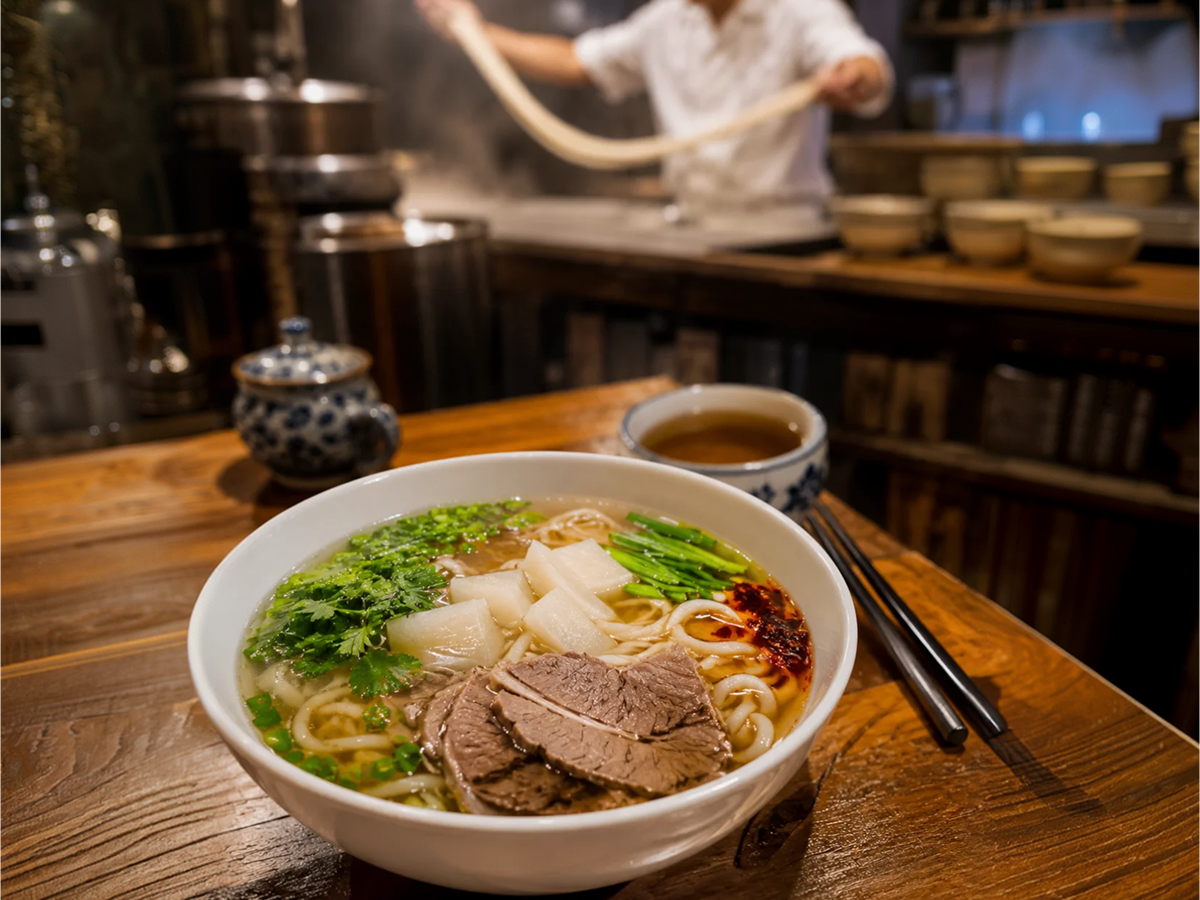
Identifying the shop type sets expectations for menu and ordering style. Lanzhou lamian shops serve hand-pulled wheat noodles in clear beef broth, while Chongqing xiaomian shops focus on small wheat noodles in fiery chili oil. Guilin rice noodle shops specialize in round rice noodles with pickled toppings, often eaten for breakfast.
Common Types and Signature Dishes
- Lanzhou lamian: hand-pulled wheat noodles in beef broth; order by noodle width.
- Chongqing xiaomian: thin wheat noodles in spicy chili oil; toppings are simple.
- Guilin rice noodles: round rice noodles with pickled beans and peanuts; add broth yourself.
Spot the Type from Signage
Look for characters like Lanzhou lamian, Chongqing xiaomian, or Guilin rice noodles. Many shops display large photos of their signature bowls near the entrance. If you see a glass case with toppings, it is likely a rice noodle shop.
Order With a Few Phrases
Using a handful of Chinese phrases for ordering and toppings prevents confusion at the counter. You do not need to speak Chinese, but pointing and saying the right words gets you the bowl you want.
Essential Phrases for Ordering
- This one: zhe ge — point at a photo or another customer's bowl.
- No spice: bu yao la — use this if you cannot handle chili oil.
- Less spice: wei la — mild heat, common in Chongqing xiaomian shops.
- Take away: da bao — useful if the shop is too crowded.
Common Toppings and Chinese Names
- Beef: niu rou — sliced or braised, standard in Lanzhou lamian.
- Egg: ji dan — usually a braised whole egg, not fried.
- Cilantro: xiang cai — say bu yao xiang cai to skip it.
- Pickled vegetables: suan cai — sour and salty, common in rice noodle shops.
Follow the Counter Flow
Understanding the typical flow—find a seat, order, pay, pick up—helps pace the meal without stress. Many noodle shops use a pay-first system; you order at the counter, get a number or receipt, and wait for your bowl.
Step-by-Step from Entry to Eating
- Scan the room for an empty table or shared seating; put a tissue packet on the table to mark it.
- Go to the counter, point at the menu or photo, and say your phrase.
- Pay immediately; cash and mobile payment are common, but foreign cards may not work.
- Take your receipt or number, then sit and wait; staff will call your number or bring the bowl.
Where to Wait and How to Get Your Food
In small shops, you may need to pick up your bowl from a counter when your number is called. In larger shops, staff bring it to your table. Watch what other customers do; that is the fastest way to learn the local rhythm.
Avoid Peak Hour Pressure
Visiting outside peak meal times reduces wait times and gives you space to order slowly. Lunch rush in most Chinese cities runs from about 11:30 a.m. to 1:00 p.m., and dinner from 5:30 p.m. to 7:00 p.m. Arrive at 11:00 a.m. or after 1:30 p.m. for a calmer counter.
General Peak Hours to Avoid
- Weekday lunch: 11:30 a.m. to 1:00 p.m. — office workers crowd small shops.
- Weekend dinner: 6:00 p.m. to 7:30 p.m. — families and groups fill larger restaurants.
- Late night: after 9:00 p.m. — some shops close or run out of popular toppings.
What to Expect During Busy Times
During peak hours, you may share a table with strangers, and staff will rush you to order. If you hesitate, they may serve the next customer first. That is normal, not rudeness; know your phrase before you reach the counter.
Prepare Before You Go
A short pre-visit checklist of phrases and expectations makes the first noodle shop visit manageable. Do this before you leave your hotel, not while standing at the counter.
Download Offline Translation Tools
- Save the Chinese characters for your chosen noodle type and toppings in a notes app.
- Use an offline translation app with camera mode to read menu characters.
- Download a basic Chinese phrasebook for food; audio playback helps with tones.
Screenshot Key Phrases
Take screenshots of the phrases in this article, especially zhe ge (this one), bu yao la (no spice), and da bao (take away). Show them to the counter staff if speaking is difficult. For vegetarian needs, read vegetarian Chinese food before choosing a shop.