



































































































We Are With You
- A Travel Consultant Rooted In China
- Immediate Response, No Need To Wait!
- Direct Contact, Highest Value

Most advice on Chinese New Year gifts is written for people who already know the system — which shop carries what, which brand is reputable, what counts as an appropriate red envelope amount by relationship. A foreign visitor does not have this. You are buying in a country you may visit once or twice, in cities you may not know well, for people whose expectations are shaped by a social context you did not grow up in.
This page does not cover what Chinese people give each other. It covers what works for a foreign visitor buying in China during the Lunar New Year season, with specific city-level guidance on where to go and what to expect.
The core problem is not complicated: you need something presentable, you need to know it is genuine, and you need to be able to carry or ship it without it arriving damaged or out of season.
These tiers apply to physical gifts, not red envelopes. Red envelope amounts are covered in a later section.
Under US$50 — the standard gift range. Food and consumables are the most reliable choice at this level. A quality tea set (not the tourist-area tin), a box of premium tea, or a fruit basket from a reputable market are all understood and appreciated. They do not require sizing or personal preference knowledge. A private guide can take you to a shop that is not a tourist trap, which matters at this level — the markup difference between a local shop and a tourist-area shop at this budget can be significant.
US$50 to US$200 — the meaningful gift range. This is where tea sets, calligraphy sets, jade or cloisonne small objects, and zodiac-themed craft items sit. At this level, authenticity and presentation matter more than the item itself. Buying from a reputable old-brand shop (老字号) rather than a market stall is the main quality signal. In Beijing, this means Tongrentang (medicinal products and health sets) or Daoxiangcun (sweets and pastry boxes). In Shanghai, it means the old Nanjing Road shops or the City God Temple area. In Chengdu, it means the stores in and around Kuanzhai Alley.
US$200 and above — the substantial gift range. Silk items from a reputable dealer, non-heritage handmade crafts (景泰蓝, cloisonne, porcelain with provenance), or custom corporate gift boxes for business relationships. At this level, your private guide's knowledge of which dealer is legitimate versus tourist-facing makes a material difference. This is not a purchase to make from a random street vendor.
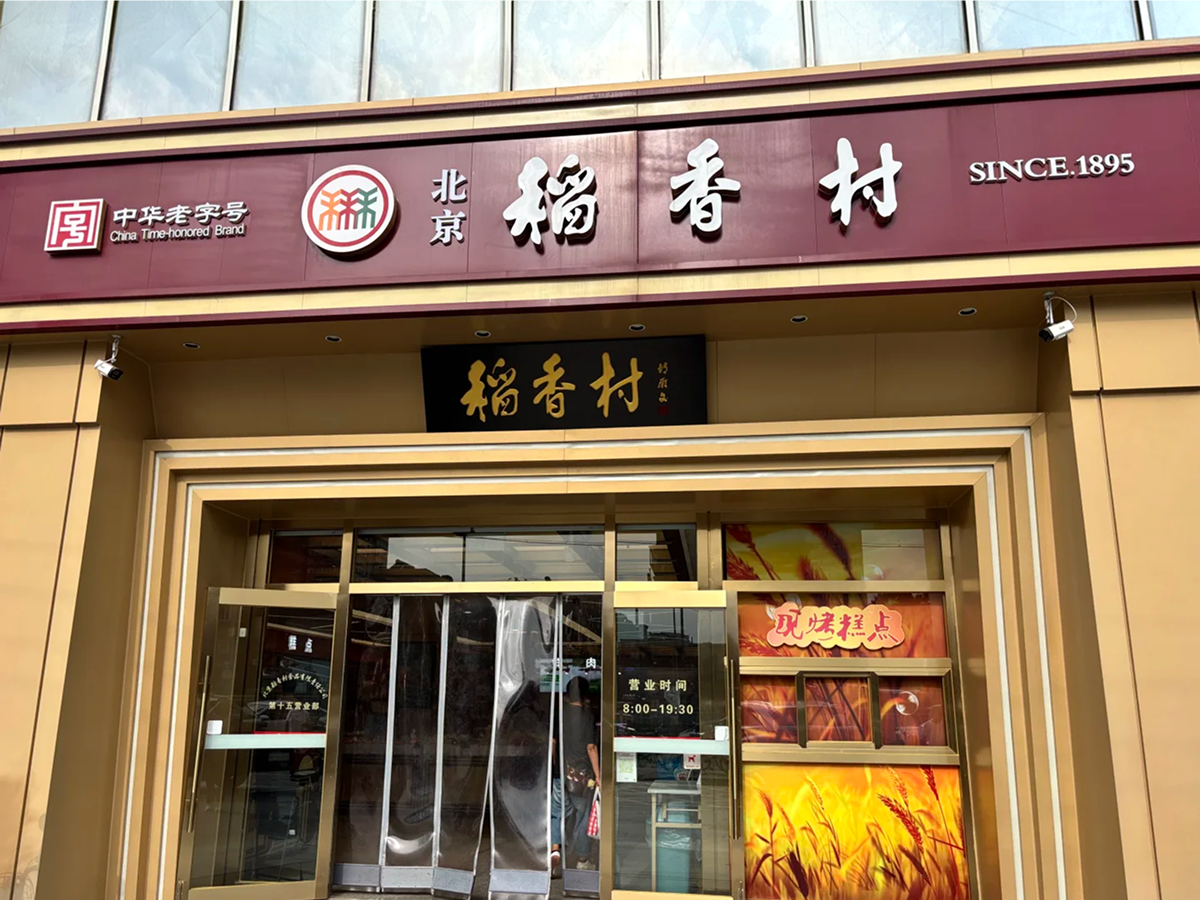
A private guide can take you to the right shop in each city. What follows is the shop type to ask for, not a specific store endorsement.
Beijing. The old-brand shops (老字号) are concentrated in two areas: the area around Qianmen and Dashilan, and near the Temple of Heaven / Hongqiao area. Tongrentang has multiple branches including one near Qianmen. Daoxiangcun has branches citywide. Tea purchases work best at the tea markets rather than the tourist-area tea shops — the Ma Lian Liang tea market near Songjiazhuang (Line 1) is a local reference, though a private guide will know the current equivalent.
Shanghai. Nanjing Road pedestrian street has reputable branches of the major old-brand food and pastry shops. For silk and higher-value items, the Shanghai Fabric Market (黄河路) has silk dealers with export experience, meaning they understand how to ship internationally. The City God Temple area (Yu Garden / Yuyuan) has craft shops; prices are higher here but the range is wider.
Chengdu. Kuanzhai Alley (宽窄巷子) and Jinsha (锦里) are the main tourist-facing shopping areas, but they are not useless — the craft shops here carry authentic items, and prices are more negotiable than equivalent Beijing locations. For tea, the tea houses around People's Park offer tea purchases as well as the tea-drinking experience. A private guide can distinguish between the showpiece shops and the ones that supply locals.
In all three cities, the key advantage of a private guide is access to shops that do not advertise to tourists. These are not secret — they are just not on the tourist maps.

This section covers the items that carry negative connotations in a Chinese New Year context. The explanations are brief and practical, not cultural deep-dives.
Alternatives exist for each of these situations. A knife set can be replaced with a ceramic knife or a kitchen accessory. A clock can be replaced with a desk lamp or a quality pen. The issue is not the item category — it is the specific cultural signal the item sends.
The appropriate gift depends heavily on the relationship. What follows is a practical breakdown, not an exhaustive cultural treatise.
Close family members. Red envelopes (红包, hongbao) are the most practical gift within close family. The amount varies by age, relationship, and region — there is no fixed formula that applies universally. If you are giving a physical gift to a family member, ask someone in the family what would be useful rather than guessing. Family members who live in China have preferences that are more specific than any guide can predict.
Business clients and colleagues. A physical gift rather than a red envelope is the standard at this level. Tea, a quality tea set, or a craft item from a reputable shop carries appropriate weight without implying anything inappropriate. Alcohol (if the recipient drinks) is also standard. A private guide or local colleague can help identify a shop with a business-oriented range. Do not give red envelopes to business contacts — this can be interpreted as attempting to influence, which carries legal and reputational risk.
Neighbors, casual acquaintances, building staff. A small physical gift or a modest hongbao is appropriate at this level. A box of pastries from a reputable shop, a small fruit basket, or a red envelope in the range of a few hundred RMB covers this level. This is not a high-stakes situation — the signal that matters is that you acknowledge the relationship, not that you give the most expensive option.
elders. Health-related items from a reputable brand (Tongrentang health sets, quality dried seafood) are appropriate and appreciated. Avoid items that imply frailty or aging — the gift should be about quality of life, not about the elder's age. Clothing in a correct size is practical and appreciated if you know the size.
Children. Red envelopes are standard. The amount varies by region and family habit. If you are giving a physical gift to a child, practical items (quality stationery, a book, a language-learning tool) are more appropriate than toys in most contexts — parents tend to appreciate the former over the latter.

Handing over a gift. Present gifts with both hands. Remove price tags. If giving to an elder or a business contact, a brief phrase in Chinese is appreciated — your guide can help with the specific phrasing. This is not a requirement, but it is noticed.
Shipping internationally. Not all items are suitable for international shipping. Food items with short shelf lives, liquid items, and items that require specific temperature or humidity conditions are poor candidates. Tea, dried goods, silk items, and crafts in rigid packaging are the most practical candidates. Allow 2–3 weeks for international shipping during the pre-CNY period — logistics networks are under pressure in the weeks leading up to the holiday.
Timing. Gifts are typically exchanged on the day before the New Year (除夕), on the first day of the New Year (初一), and during the first few days of the holiday period. Gifts given after the fifth day of the New Year are still acceptable but carry less celebratory weight. If you are visiting a family or business contact during the CNY period, ask when the appropriate time to present a gift would be — in some families, the timing is structured and a gift given at the wrong moment creates awkwardness rather than goodwill.
How much should a red envelope contain? There is no universal answer. Within close family, amounts range from a few hundred to several thousand RMB depending on the family, the region, and the relationship. For casual business contacts or neighbors, amounts in the 100–500 RMB range are standard. If you are unsure, give less rather than more — an undersized red envelope with goodwill is better than an oversized one that creates awkwardness about what is expected in return.
Will giving a gift to a business contact be seen as bribery? Small, appropriate gifts exchanged in a normal business context are not considered bribery. The line is drawn at items with significant monetary value, cash equivalents, and gifts given in contexts that suggest an expectation of favor in return. A quality box of tea given at the end of a productive business relationship is not a bribe. A luxury item given at the time of a contract negotiation is a different situation. When in doubt, ask a local colleague before the gift-giving moment.
What is the easiest gift for a foreign visitor to buy and take home? Quality tea (properly packaged for travel), silk items in hard packaging, and small craft objects (cloisonne, jade carvings) in a gift box. These are verifiable in quality, shippable, and carry no strong cultural risk. A private guide in each city can direct you to a reputable shop rather than a tourist-area store.
A fine hotel shapes the warmth of every journey