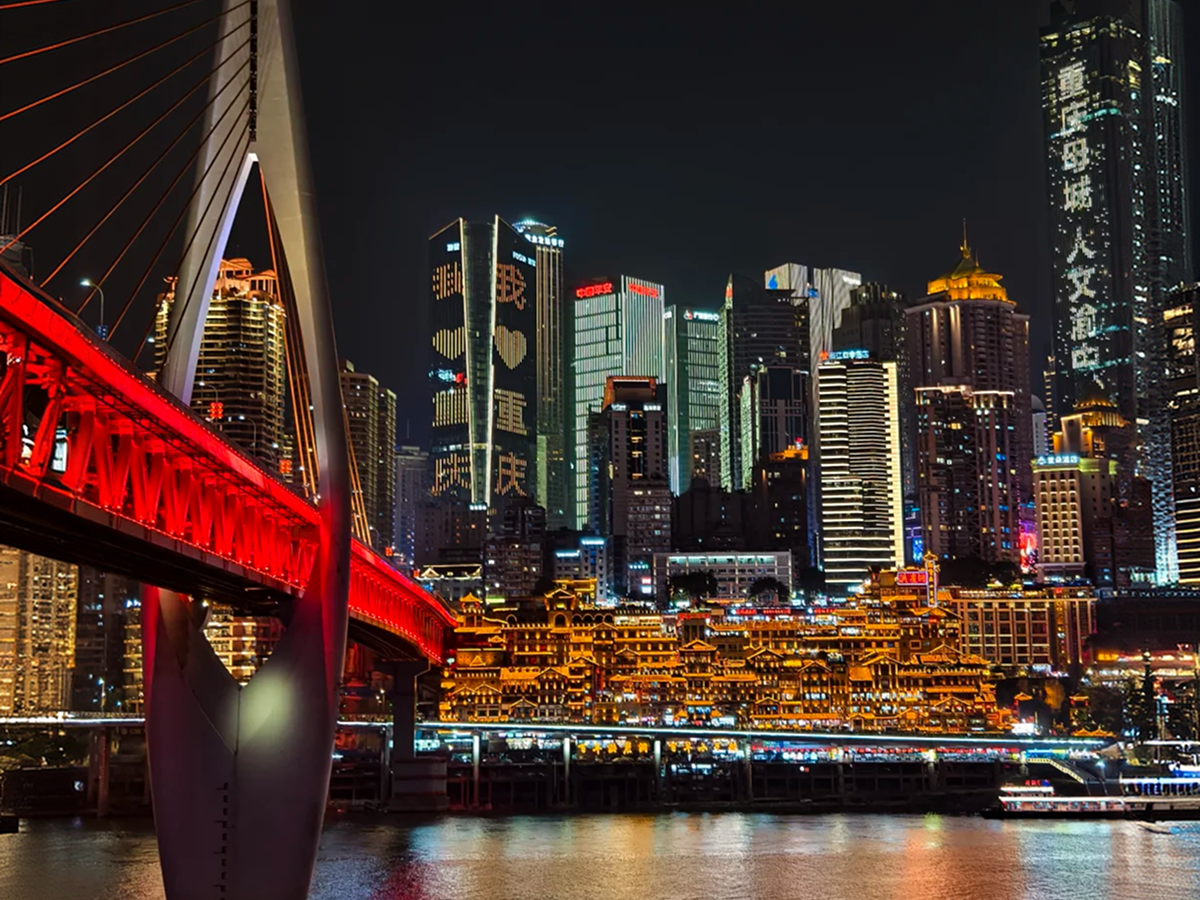
Chongqing Cyberpunk: How to Time Your Night Shots
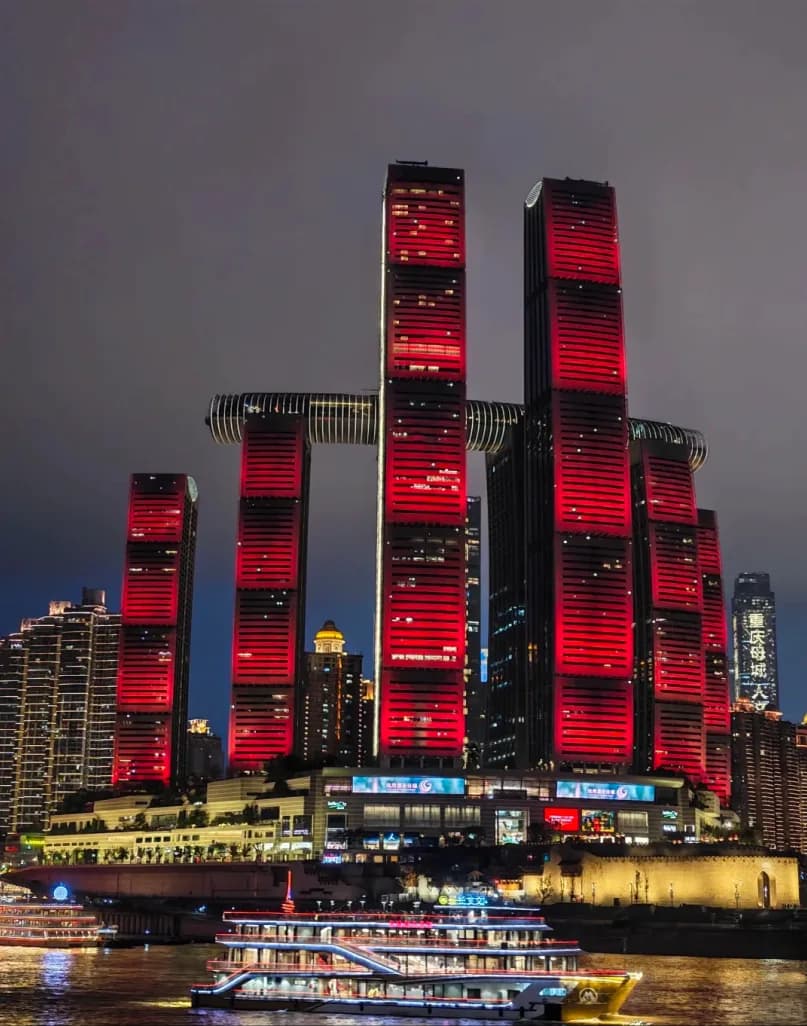
Chongqing's cyberpunk look is not a city-wide aesthetic. It is a night-time, weather-dependent phenomenon that only appears from specific elevated viewpoints. Most visitors expect neon everywhere, but in daylight or dry weather the effect vanishes.
The reliable window is the blue hour after sunset, when artificial lights balance with the remaining daylight. Wet streets after rain make the neon glow stronger. Plan your shoot around those conditions, not around a fixed itinerary.
Blue Hour Is Your Only Window
The chongqing cyberpunk effect only appears during the brief blue hour after sunset. That is when the sky holds enough deep blue to contrast with the neon, and the city lights have just switched on. Arrive too early and the daylight washes out the signs; arrive too late and the sky goes black, losing the layered depth.
Half hour before sunset: set up at your chosen viewpoint and wait. The transition lasts roughly 20 to 40 minutes depending on cloud cover. Check the local sunset time for your travel date and work backwards from there.
- Cloudy evenings: the blue hour stretches longer and the sky glows, but the neon may look softer.
- Clear evenings: the blue is deeper and shorter, so you need to be ready.
- Heavy rain: visibility drops and the reflections turn into blur; wait for the rain to stop.
This is a timing problem, not a location problem. You can stand in the right spot and still miss the shot if you arrive after the blue fades.
Two Viewpoints Beat Random Wandering
The opposite bank of Hongya Cave and the Qiansimen Bridge pedestrian walkway give the cleanest elevated compositions. Both let you shoot across the river or down onto the layered architecture without obstructions.
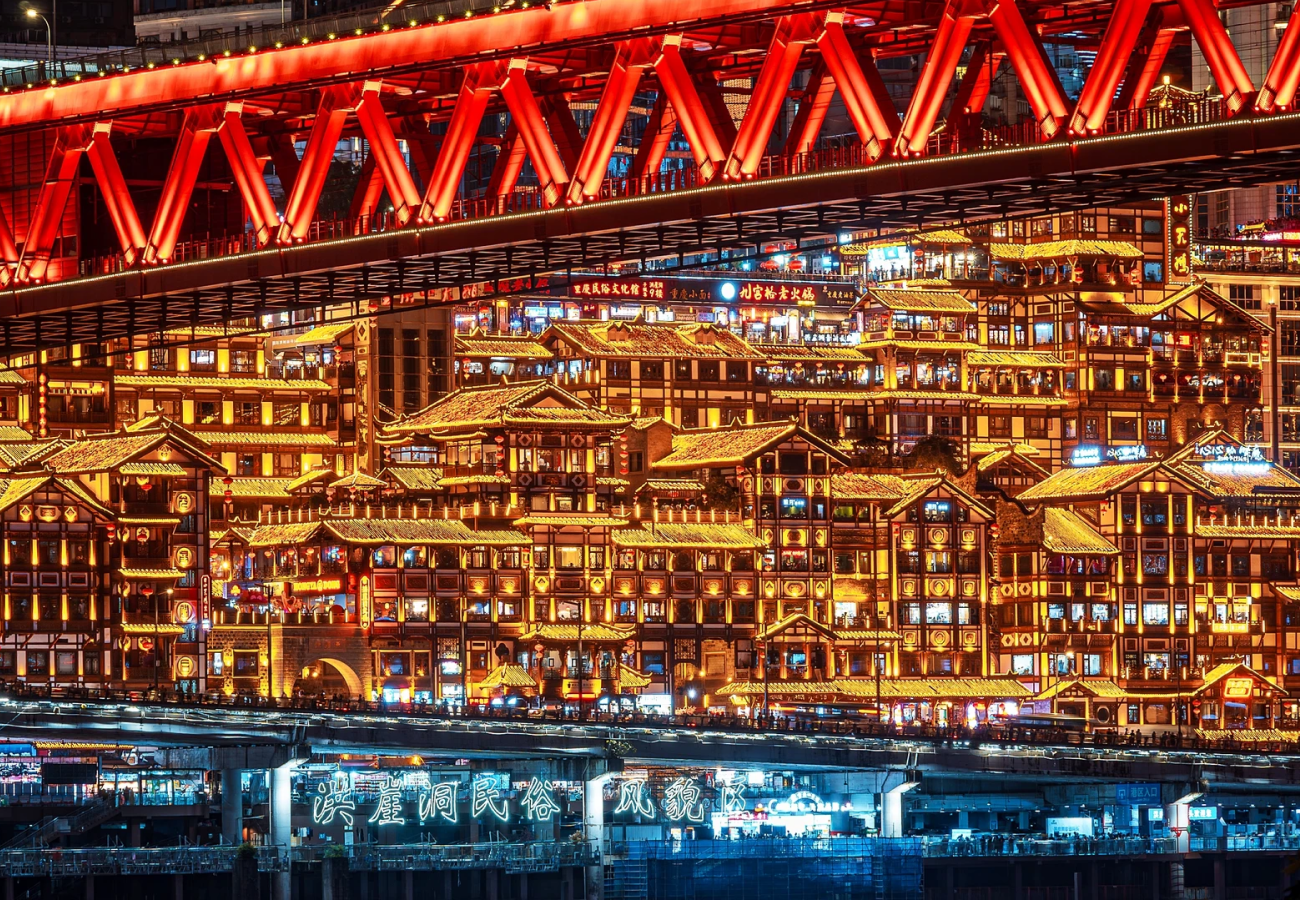
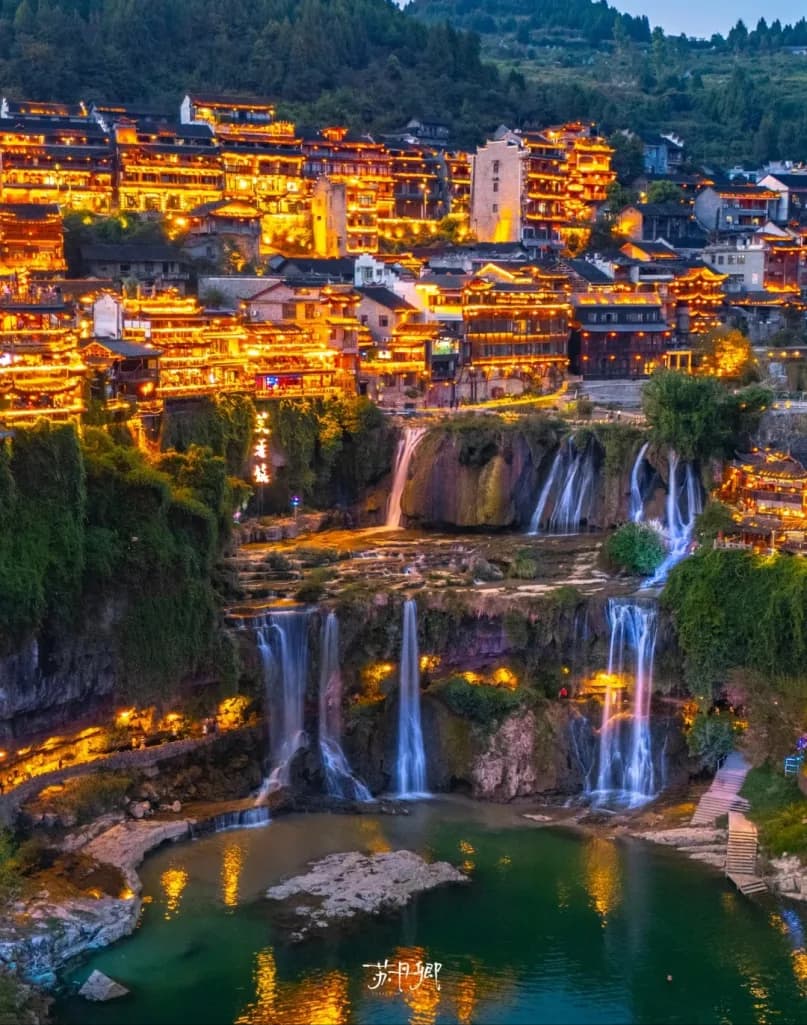
Opposite bank of Hongya Cave: stand on the south side of the Jialing River and shoot north. The stilt-house complex stacks up against the cliff, and the neon reflects in the water below. This is the classic postcard angle.
Qiansimen Bridge pedestrian walkway: walk out onto the bridge and shoot back toward Hongya Cave or down onto the traffic. The elevated perspective compresses the buildings and signs into a dense wall of light.
- Check the pedestrian access hours for Qiansimen Bridge before you go; it can close at night.
- Both viewpoints are public and free, but they get crowded after dark.
- Bring a tripod if you plan to shoot long exposures from the bridge.
Random wandering through Jiefangbei or Guanyinqiao will not give you the same clean frames. The cyberpunk look depends on elevation and distance, not on being inside the neon.
Wet Streets Make the Neon Glow
Rain or lingering moisture on the pavement creates reflections that intensify the neon. Overcast or post-rain evenings work better than clear, dry nights. The wet asphalt acts like a mirror, doubling every sign and light source.
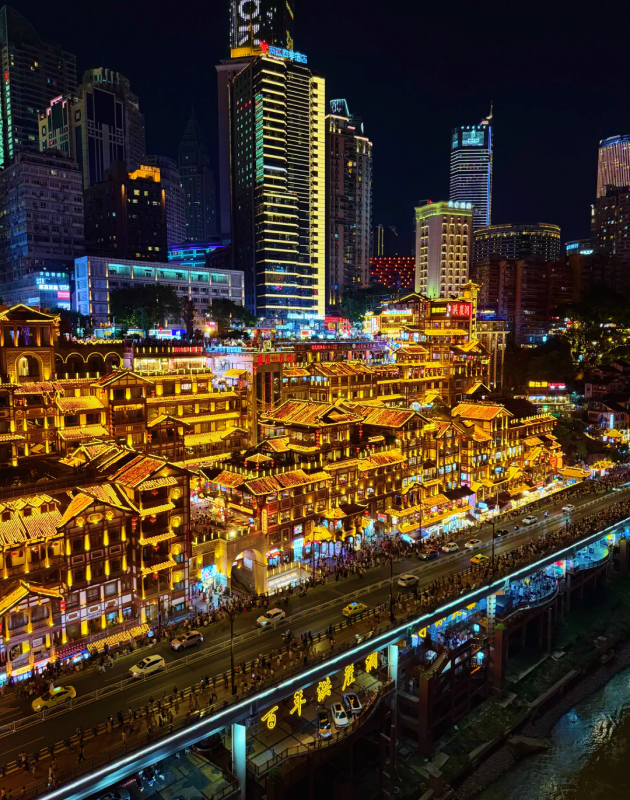
After a light rain: the streets are wet but the air is clear. This is the ideal condition. The reflections are sharp and the neon colors saturate.
During a drizzle: you can still shoot, but protect your lens. The mist adds atmosphere, but too much moisture will soften the details.
- Check the forecast for recent rain or high humidity.
- Avoid heavy downpours that obscure the skyline.
- Carry a lens cloth and a rain cover for your camera.
Dry nights in Chongqing look flat. The neon is there, but without reflections the scene loses the futuristic depth that defines the cyberpunk aesthetic.
A Telephoto Lens Compresses the Chaos
Using a telephoto lens to compress layered architecture and signage enhances the futuristic density in your frame. A 70-200mm or similar range lets you stack buildings, bridges, and signs into a single tight composition.
From the opposite bank: a telephoto pulls Hongya Cave and the surrounding towers closer together, making the cliffside look even more vertical.
From Qiansimen Bridge: a telephoto isolates the neon signs and traffic trails, cutting out the empty sky and dark water.
- A wide-angle lens will show too much empty space and reduce the neon density.
- A telephoto also lets you shoot from less crowded spots without losing the composition.
- If you only have a phone, use the telephoto camera if available.
The compression is what makes Chongqing look like a sci-fi city. Without it, the buildings spread out and the cyberpunk effect weakens.
Check the Weather Before You Go
Before heading out, check the local forecast and aim for a night with recent rain or high humidity. Avoid heavy downpours that obscure views. Chongqing's weather changes fast, so check again in the late afternoon.
- Recent rain: wet streets and clear air—best conditions.
- High humidity with no rain: the air may be hazy, but the neon still glows.
- Clear and dry: the cyberpunk effect will be weak; consider another evening.
- Heavy rain or fog: visibility drops; wait for the weather to clear.
Weather is the one variable you cannot control. If the forecast is bad, shift your shoot to another night or accept a different look. For more on planning your time in the city, see 48 Hours in Chongqing: A Precise Two-Day Plan.
Fit the Shoot Into a Longer Trip
If you are already traveling between Chongqing and Zhangjiajie, the cyberpunk shoot fits naturally on your first or last evening in Chongqing. The 8-day Chongqing Zhangjiajie Itinerary leaves evenings free for self-exploration, which is when the blue hour happens.
Arrival day: after check-in, head to the opposite bank of Hongya Cave for sunset. You will be tired, but the timing works if your flight lands by mid-afternoon.
Departure day: if you have a late train or flight, use the previous evening for the shoot and keep the last morning for a relaxed breakfast.
TravelToQin can arrange a private car and guide to get you to the viewpoints at the right time, but we cannot guarantee the weather or the blue hour. We also cannot create private access to observation decks or skip any queues. What we can do is plan the logistics so you are standing in the right place when the light turns.
Send your Chongqing nights and walking limits through contact.